

Roles–IMA Worldwide AIM–IMA Worldwide Comm–IMA Worldwide Metrics–IM
Effective change management is crucial for organizations aiming to adapt and thrive in a rapidly evolving business landscape. This article delves into executive strategies that facilitate successful change initiatives, focusing on methodologies, leadership roles, and the importance of communication. Readers will gain insights into how structured approaches can lead to organizational transformation and the pivotal role of executives in this process. Many organizations struggle with implementing change due to resistance and lack of clear direction. By understanding effective strategies, executives can navigate these challenges and foster a culture of adaptability. This article will cover core change management strategies, the AIM methodology, key components of effective implementation, and the role of leadership in driving change.
Key Takeaways
- Effective change management requires clear communication, stakeholder engagement, and continuous feedback.
- The AIM methodology offers a structured, measurable framework for successful organizational transformation.
- Executive leadership plays a critical role in modeling behaviors, providing support, and fostering trust during change.
- Measuring change success through KPIs and feedback is essential for continuous improvement.
- Certification and consulting services can enhance executive capabilities and tailor change strategies to organizational needs.
Core Change Management Strategies for Executives
Executives play a vital role in steering their organizations through change. Implementing effective change management strategies is essential for minimizing disruption and maximizing engagement. Key strategies include:
- Clear Communication Plans: Establishing transparent communication channels ensures that all stakeholders are informed and aligned with the change objectives.
- Stakeholder Engagement: Actively involving stakeholders in the change process fosters buy-in and reduces resistance, making transitions smoother.
- Continuous Feedback Mechanisms: Regularly soliciting feedback allows for adjustments to be made in real-time, enhancing the overall effectiveness of the change initiative.
These strategies form the foundation for successful change management, enabling organizations to adapt and thrive in dynamic environments. Following these principles can significantly enhance the likelihood of successful outcomes.
AIM Methodology for Organizational Transformation
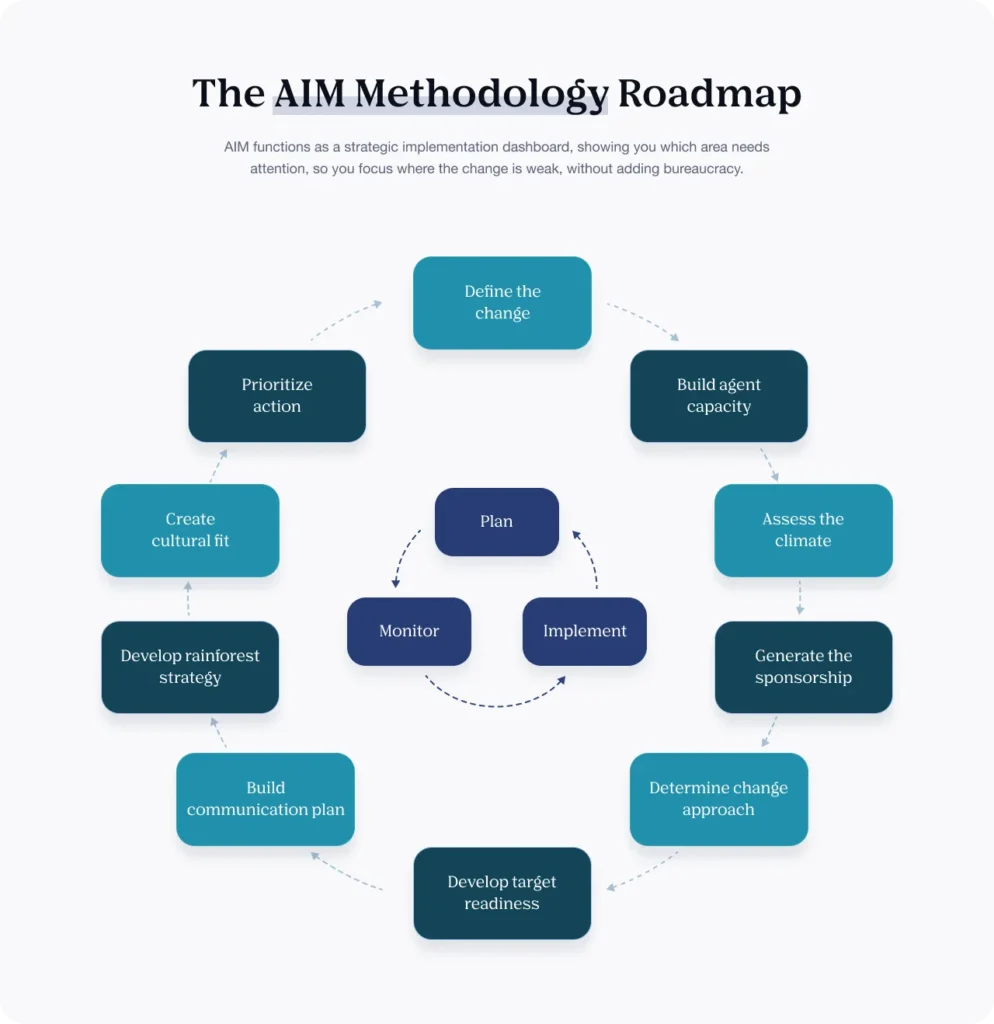
The AIM methodology provides a structured framework for organizations to implement change effectively. This approach emphasizes measurable outcomes and repeatable processes, making it a valuable tool for executives. The key components of the AIM methodology include:
- Structured Framework for Planning Change: This framework guides organizations through the change process, ensuring that all aspects are considered and addressed.
- Focus on Measurable Outcomes: By establishing clear metrics, organizations can assess the effectiveness of their change initiatives and make data-driven decisions.
- Tools for Repeatable Change Initiatives: The AIM methodology equips leaders with tools that can be applied across various change initiatives, promoting consistency and efficiency.
For those looking to deepen their understanding of change management, the AIM Change Management Certification offered by IMA Worldwide equips business leaders, executives, and change agents with the necessary skills and methodologies to lead organizational transformation effectively.
Key Components of Effective Change Implementation
Successful change implementation hinges on several critical components that executives must prioritize. These include:
- Effective Communication: Clear and consistent messaging helps to alleviate uncertainty and build trust among employees.
- Stakeholder Engagement: Involving key stakeholders in the planning and execution phases ensures that their insights and concerns are addressed.
- Training and Support: Providing adequate training and resources empowers employees to adapt to new processes and systems confidently.
By focusing on these components, organizations can enhance their change implementation efforts and achieve desired outcomes.
Role of Executive Leadership

Executive leadership is pivotal in managing change within organizations. Leaders must model desired behaviors and create an environment conducive to change. Key responsibilities include:
- Modeling Desired Behaviors: Executives should exemplify the changes they wish to see, demonstrating commitment and accountability.
- Visibility and Accessibility: Being present and approachable encourages open dialogue and fosters trust among employees.
- Empathy and Support: Understanding the challenges employees face during transitions allows leaders to provide the necessary support and resources.
Real-world scenarios often highlight the complexities executives face when implementing systemic changes, underscoring the need for a holistic approach beyond just new policies.
Executive Leadership in Systemic Change Implementation
During the first year, executive leaders implemented new policies and procedures before addressing the underlying system problems and weaknesses in DCF necessary to support
Executive leadership challenges implementing systemic change under conditions of litigated reform, 2016
Effective leadership not only drives change but also cultivates a culture of resilience and adaptability within the organization.
Contributions of Business Leaders and Change Agents
Business leaders and change agents play crucial roles in facilitating change initiatives. Their contributions include:
- Vision Setting: Leaders articulate a clear vision for change, helping to align the organization’s efforts.
- Facilitating Change: Change agents act as liaisons between leadership and employees, ensuring that communication flows effectively.
- Engaging Employees: By actively involving employees in the change process, leaders can foster a sense of ownership and commitment.
These contributions are essential for creating a supportive environment that encourages successful change.
Influence of Communication on Change Management Outcomes
Communication significantly impacts the success of change management initiatives. Effective communication strategies can lead to:
- Transparency: Open communication fosters trust and reduces uncertainty among employees.
- Engagement: Engaging employees through regular updates and feedback opportunities enhances their commitment to the change process.
- Building Trust: Consistent messaging helps to build trust in leadership and the change initiative itself.
By prioritizing communication, organizations can improve their change management outcomes and foster a more positive organizational culture.
Measuring Change Management Success
Measuring the success of change initiatives is critical for understanding their impact and effectiveness. Organizations can utilize various metrics to assess success, including:
Indeed, effective change management metrics are not merely data points but crucial tools that reveal the true trajectory and success of an organizational transformation.
Mastering Change Management Metrics for Organizational Success
But here’s the good news:change management metrics are your secret weapon. These aren’t just boring spreadsheet numbers—they’re powerful indicators that tell you whether your transformation is soaring or sinking. When you combine solid change management metrics with a strategic change management roadmap, strong change management governance, and a deep understanding of how people think and feel (hello, cognition vsmetacognitionand the cognition and emotion impact factor), you’ve got a recipe for change that actually sticks.
Mastering Change Management Metrics for Success, 2024
- Establishing KPIs: Key Performance Indicators (KPIs) provide measurable benchmarks for evaluating progress.
- Quantitative Metrics: Data-driven metrics, such as productivity levels and employee engagement scores, offer insights into the effectiveness of change initiatives.
- Qualitative Feedback: Gathering feedback from employees helps to identify areas for improvement and gauge overall sentiment regarding the change.
| Metric | Description | Value |
|---|---|---|
| Employee Engagement | Measures employee involvement and commitment | High engagement correlates with successful change |
| Productivity Levels | Assesses output before and after change implementation | Increased productivity indicates effective change |
| Feedback Scores | Collects employee sentiment regarding the change process | Positive feedback reflects successful communication |
This table illustrates how different metrics can provide valuable insights into the effectiveness of change management initiatives.
What Are the Benefits and Processes of AIM Change Management Certification?
The AIM Change Management Certification offers numerous benefits for executives and change agents. Key advantages include:
- Practical Skills: Participants gain hands-on experience with change management methodologies that can be applied in real-world scenarios.
- Professional Credibility: Earning the certification enhances professional credibility and demonstrates a commitment to effective change leadership.
- Real-World Application: The certification program emphasizes practical applications, ensuring that participants can implement what they learn in their organizations.
By pursuing this certification, leaders can enhance their skills and drive successful change initiatives.
How Does Certification Improve Executive Change Leadership Skills?
The AIM Change Management Certification enhances executive leadership skills in several ways:
- Validation of Expertise: The certification serves as a formal recognition of an executive’s knowledge and skills in change management.
- Focus on Adoption: The program emphasizes strategies for ensuring that changes are adopted and sustained within the organization.
- Reinforcement Strategies: Participants learn techniques for reinforcing changes and maintaining momentum over time.
These enhancements contribute to more effective leadership during change initiatives.
What Is the Certification Process and Its Impact on Business Transformation?
The certification process involves several key steps that prepare executives for effective change leadership:
- Training Format: The program includes a combination of online and in-person training sessions, providing flexibility for busy executives.
- Learning Objectives: Participants engage with core concepts and methodologies essential for successful change management.
- Focus on Adoption: The curriculum emphasizes strategies for ensuring that changes are embraced by employees.
The impact of this certification on business transformation is significant, as it equips leaders with the tools necessary to navigate complex change processes.

Which Consulting Services Support Customized Change Management Solutions?
Organizations often require tailored consulting services to support their change management efforts. Key services include:
- Strategy Execution: Consultants help organizations develop and implement effective change strategies.
- Digital Transformation: Support for integrating digital tools and technologies into change initiatives enhances efficiency and effectiveness.
- Culture Change: Consultants assist organizations in fostering a culture that embraces change and innovation.
These consulting services provide valuable support for organizations seeking to implement customized change management solutions.
How Does IMA Worldwide Tailor Consulting to Executive Needs?
IMA Worldwide specializes in providing consulting services tailored to the unique needs of executives. Their approach includes:
- Collaboration with Clients: IMA Worldwide works closely with organizations to understand their specific challenges and goals.
- Hands-On Support: Consultants provide direct support throughout the change process, ensuring that executives have the resources they need.
- Change Management Methodology: The firm employs proven methodologies to guide organizations through successful change initiatives.
This tailored approach ensures that executives receive the support necessary to lead their organizations effectively.
What Are the Measurable Outcomes of Change Management Consulting?
Change management consulting can yield several measurable outcomes that demonstrate its effectiveness. These include:
- KPIs: Establishing clear KPIs allows organizations to track progress and assess the impact of consulting efforts.
- Quantitative Metrics: Data-driven metrics provide insights into productivity and engagement levels post-consulting.
- Qualitative Feedback: Gathering employee feedback helps to evaluate the overall sentiment regarding the change process.
By focusing on these outcomes, organizations can better understand the value of consulting services in their change management efforts.
What Tools and Techniques Facilitate Effective Change Management?
Several tools and techniques can enhance the effectiveness of change management initiatives. These include:
- Methodologies: Structured methodologies provide a framework for planning and executing change.
- Software Solutions: Digital tools can streamline communication and project management during change initiatives.
- Leadership Practices: Effective leadership practices, such as active listening and empathy, foster a supportive environment for change.
Utilizing these tools and techniques can significantly improve the success of change management efforts.
How Do Digital Tools Integrate with Change Management Frameworks?
Digital tools play a crucial role in modern change management frameworks. Their integration can lead to:
- Improved Communication: Digital platforms facilitate real-time communication among stakeholders, enhancing collaboration.
- Enhanced Collaboration: Tools that support teamwork enable employees to work together more effectively during transitions.
- Data-Driven Insights: Digital tools provide valuable data that can inform decision-making and strategy adjustments.
By leveraging digital tools, organizations can enhance their change management processes and outcomes.
What Are the Leading Change Models and Their Applications?
Several leading change models offer frameworks for organizations to implement change effectively. These include:
- AIM Methodology: Focuses on structured planning and measurable outcomes.
- Prosci Model: Emphasizes the importance of individual change and employee engagement.
- Kotter’s 8-Step Process: Provides a step-by-step approach to leading change initiatives.
Understanding these models allows executives to select the most appropriate framework for their organization’s needs.
How Can Executives Monitor and Measure Change Management Success?
Monitoring and measuring change management success is essential for continuous improvement. Executives can utilize various methods, including:
- Key Performance Indicators: Establishing KPIs helps track progress and assess the effectiveness of change initiatives.
- Assessment Methods: Regular assessments provide insights into the impact of changes on organizational performance.
- Evaluation Tools: Utilizing evaluation tools allows for comprehensive analysis of change outcomes.
By implementing these monitoring strategies, executives can ensure that their change initiatives remain on track and achieve desired results.
What Key Performance Indicators Track Organizational Change Progress?
Tracking organizational change progress requires the use of specific Key Performance Indicators (KPIs). Important KPIs include:
- Employee Engagement Levels: Measuring engagement helps assess the impact of change on employee morale and commitment.
- Adoption Rates: Tracking how quickly employees adopt new processes provides insights into the effectiveness of change initiatives.
- Performance Metrics: Evaluating performance metrics post-change helps determine the overall success of the initiative.
These KPIs provide valuable insights into the effectiveness of change management efforts and guide future initiatives.
How Do Recent Case Studies Inform Best Practices in Change Leadership?
Recent case studies offer valuable insights into best practices in change leadership. By analyzing successful change initiatives, organizations can learn:
- Real-World Examples: Case studies provide concrete examples of effective change management strategies in action.
- Successful Methodologies: Understanding which methodologies yielded positive results can inform future initiatives.
- Lessons Learned: Analyzing challenges faced during change initiatives helps organizations avoid similar pitfalls.
By leveraging insights from case studies, executives can enhance their change leadership practices and drive successful outcomes.
To learn more about how IMA Worldwide can help your organization, contact us today.