

Teams Adaptability Engagement AIM Agents Metrics Stories
In today’s fast-paced business environment, effective leadership is crucial for driving successful change initiatives. Leaders must not only understand the dynamics of change but also possess the skills to guide their teams through transitions. This article explores the key principles, best practices, and essential skills that leaders need to implement successful change management strategies. Readers will learn how to foster a culture of adaptability, engage employees, and measure the impact of change initiatives. By examining real-world examples and methodologies, such as the AIM Change Management Methodology, this guide provides a comprehensive overview of how leaders can effectively navigate organizational transformations.
Key Takeaways
- Effective leadership is essential for guiding successful change initiatives in dynamic business environments.
- Key principles such as clear vision, engagement, and empowerment underpin successful change management.
- Best practices include open communication, early employee involvement, and measuring success through metrics.
- Essential change leadership skills involve vision, empathy, engagement, and modeling behavior.
- The AIM Change Management Methodology offers a structured, evidence-based approach to facilitate measurable and sustainable change.
- Certification programs like CCMP enhance professional skills and credibility in change management.
- Developing change agents within organizations supports smoother transitions and addresses resistance effectively.
- Monitoring KPIs and leveraging data analytics are critical for assessing and improving change initiatives.
Best Practices
Implementing change management strategies requires adherence to best practices that enhance the likelihood of success. These practices include:
- Fostering Open Communication: Transparent communication helps to build trust and reduces resistance to change.
- Involving Employees Early: Engaging employees in the change process from the outset encourages buy-in and reduces uncertainty.
- Measuring Success: Establishing metrics to evaluate the effectiveness of the change initiative allows leaders to make informed adjustments as needed.
By following these best practices, leaders can create a supportive environment that facilitates successful change.
Real-World Examples
Successful change management initiatives can be observed across various industries. For instance, healthcare organizations have implemented open forums to discuss changes in patient care protocols, allowing staff to voice concerns and contribute ideas. Additionally, training programs that focus on skill development have proven effective in preparing employees for new technologies. Focus groups have also been utilized to gather feedback on proposed changes, ensuring that employee perspectives are considered in the decision-making process.
What Are the Essential Change Leadership Skills for Driving Transformation?

Effective change leadership requires a specific set of skills that enable leaders to guide their organizations through transformation. These skills include vision and communication, empathy and engagement, and modeling behavior. Leaders must articulate a compelling vision that inspires others to embrace change. Empathy allows leaders to understand the emotional responses of their team members, fostering a supportive environment. By modeling desired behaviors, leaders set a standard for their teams to follow, reinforcing the change initiative.
Which competencies define effective organizational change leaders?
Effective organizational change leaders possess competencies that enable them to build a change-ready culture. These include:
- Building a Change-Ready Culture: Leaders must cultivate an environment that embraces change as a constant.
- Training and Development: Continuous learning opportunities empower employees to adapt to new challenges.
- Feedback Mechanisms: Implementing systems for regular feedback helps leaders gauge employee sentiment and adjust strategies accordingly.
How does emotional intelligence enhance change leadership success?
Emotional intelligence plays a critical role in enhancing change leadership success. Leaders with high emotional intelligence can better understand team emotions, which fosters trust and collaboration. This understanding allows leaders to communicate effectively, addressing concerns and providing reassurance during times of uncertainty. By building trust, leaders can create a more resilient team that is better equipped to navigate change.
How Does the AIM Change Management Methodology Facilitate Successful Change?
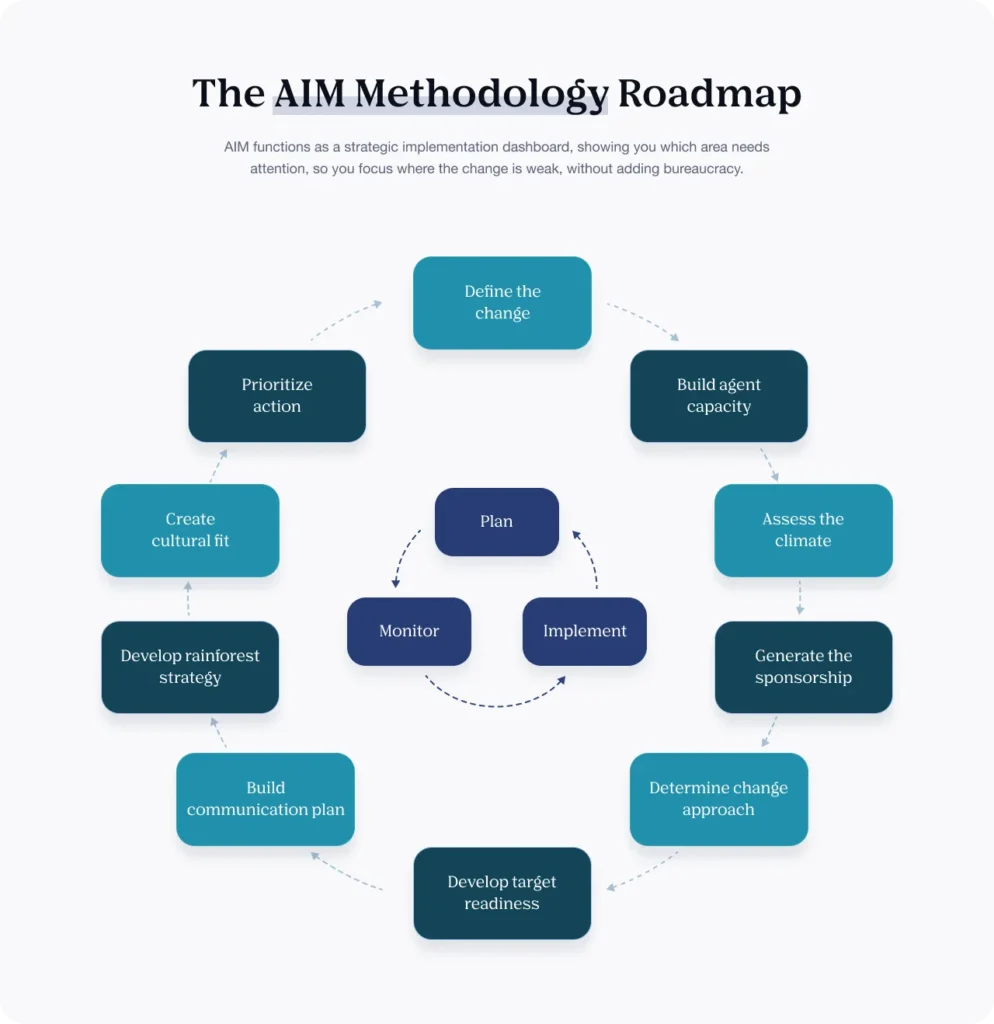
The AIM Change Management Methodology is a structured approach that facilitates successful change by focusing on diagnosis before prescription, employing evidence-based strategies, and ensuring measurable results. This methodology emphasizes the importance of understanding the unique context of each organization before implementing changes, allowing for tailored solutions that address specific challenges.
Key Principles
The AIM methodology is built on key principles that guide its application:
- Closing the Gap: Identifying discrepancies between current and desired states helps to clarify the need for change.
- Capability, Not Dependency: Fostering internal capabilities ensures that organizations can sustain change independently.
Implementation Steps
Implementing the AIM methodology involves several critical steps:
- Express, Model, Reinforce: Clearly communicate the change vision and model desired behaviors.
- Assess Risks: Identify potential obstacles and develop strategies to mitigate them.
Measurable Outcomes
The AIM methodology allows organizations to track measurable outcomes, such as:
- Trackable ROI: Evaluating the return on investment for change initiatives helps to justify efforts and resources.
- Behavioral Shifts: Monitoring changes in employee behavior provides insights into the effectiveness of the change process.
What Are the Benefits and Process of Change Management Certification Programs?
Change management certification programs offer numerous benefits for professionals seeking to enhance their skills and credibility in the field. These programs provide structured learning opportunities that equip individuals with the knowledge and tools necessary to lead change effectively.
Key Advantages of CCMP Certification
Obtaining the Certified Change Management Professional (CCMP) certification offers several advantages:
- Salary Increases: Certified professionals often command higher salaries due to their specialized knowledge.
- Improved Job Marketability: Certification enhances an individual’s qualifications, making them more competitive in the job market.
Certification Steps
The process to obtain CCMP certification typically involves:
- Complete a Training Program: Participants must undergo a comprehensive training program that covers essential change management concepts.
- Pass the Certification Exam: Candidates must demonstrate their knowledge by passing a rigorous exam.
How Do Leaders Develop Change Agents to Support Transformation Initiatives?
Developing change agents within an organization is essential for supporting transformation initiatives. Change agents are individuals who advocate for and facilitate change, helping to bridge the gap between leadership and employees.
What strategies enable effective change agent development within organizations?
Effective strategies for developing change agents include:
- Utilizing Focus Groups: Engaging employees in focus groups allows for the identification of potential change agents and their specific strengths.
- Continuous Feedback Mechanisms: Providing ongoing feedback helps change agents refine their skills and adapt to new challenges.
How do change agents contribute to measurable business outcomes?
Change agents play a vital role in achieving measurable business outcomes by:
- Facilitating Change: They help to implement changes smoothly, reducing disruption and resistance.
- Addressing Resistance: Change agents can identify and address resistance points, ensuring a more cohesive transition.

What Case Studies Demonstrate Measurable Success in Leading Change Initiatives?
Case studies provide valuable insights into successful change initiatives and the effectiveness of various methodologies. Organizations that have successfully implemented the AIM methodology often report significant improvements in employee engagement and productivity.
Which organizational transformations highlight AIM methodology effectiveness?
Several organizations have successfully transformed their operations using the AIM methodology, demonstrating its effectiveness in driving change. These transformations often involve comprehensive assessments and tailored strategies that address specific organizational needs.
What measurable outcomes validate leadership-driven change success?
Measurable outcomes that validate leadership-driven change success include:
- Employee Engagement Levels: Increased engagement often correlates with successful change initiatives.
- Adoption Rates: High adoption rates of new processes indicate effective change management practices.
How Can Leaders Monitor and Measure the Impact of Change Initiatives?
Monitoring and measuring the impact of change initiatives is crucial for understanding their effectiveness. Leaders must establish key performance indicators (KPIs) that provide insights into the success of their change efforts.
What KPIs effectively track change management progress and success?
Effective KPIs for tracking change management progress include:
- Employee Satisfaction: Surveys can gauge employee sentiment regarding the change process.
- Performance Metrics: Tracking productivity levels before and after the change provides a clear picture of its impact.
How do structured data and analytics enhance change leadership strategies?
Structured data and analytics play a significant role in enhancing change leadership strategies by:
- Tracking User Engagement: Analyzing engagement data helps leaders understand how employees are responding to changes.
- Identifying Areas for Improvement: Data-driven insights allow leaders to pinpoint areas that require additional support or adjustment.
To learn more about how we can help, please contact us today.
For leaders looking to deepen their expertise, consider exploring change management certification programs. These programs offer structured learning opportunities that equip individuals with the knowledge and tools necessary to lead change effectively.