
Change Management Problems
Why Organizational Transformations Fail and How to Achieve Lasting Implementation
Most transformations do not fail because the strategy was wrong. They fail because leaders mistake deployment for adoption, and completion for change. Understanding the difference is where lasting results begin.
Quick Answer
Organizational transformations fail when leaders treat change as a project to install rather than a transition to implement. The three most common structural failure drivers are absent or passive sponsorship, insufficient target readiness assessment, and measuring deployment activity instead of actual behavior change. AIM prevents these failures by diagnosing leadership alignment, cultural capacity, and adoption risk before prescribing action.
The Core Problem
The Installation vs. Implementation Gap
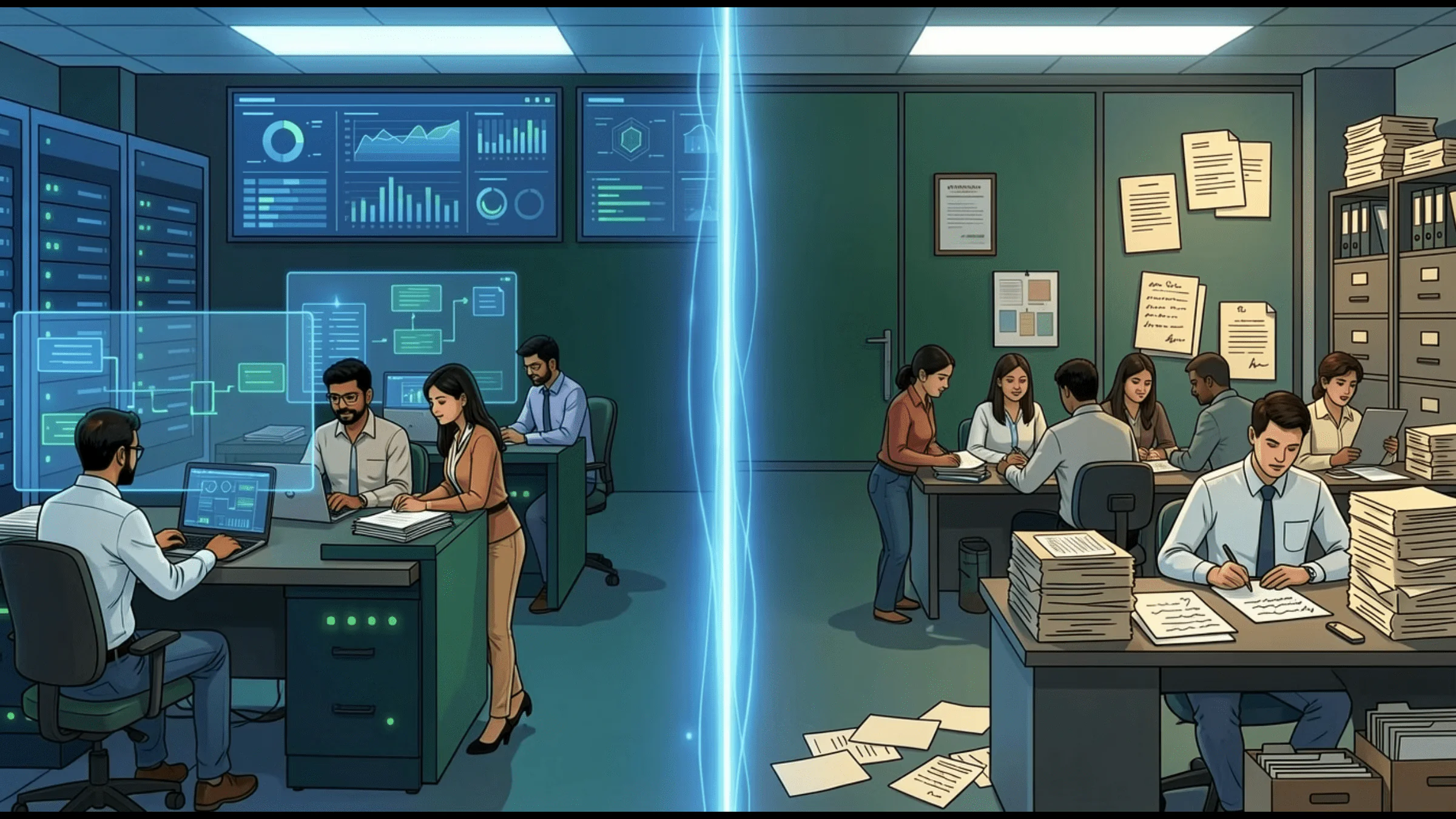
Every failed transformation has a moment where leadership declared victory too soon. The technology went live. The training was completed. The new process was documented. Leadership moved on to the next priority. Meanwhile, in offices and on shop floors, people quietly returned to doing things the old way.
This is the installation trap. Installation means the change is technically in place. A new ERP system is live. A restructured org chart is published. A new quality standard is documented. Implementation means something far more demanding: the target population has changed their behavior, the new way of working is producing the intended results, and the organization is no longer dependent on external pressure to sustain it.
The distance between those two states is where transformations die. Organizations that close this gap do so by treating the adoption journey as the primary work, not an afterthought to technical deployment.
| Installation | Implementation |
|---|---|
| System is live | People use it consistently |
| Training complete | Behavior has changed |
| Process documented | Process is followed |
| Project closed | Results are sustained |
| Rollout finished | Adoption is measured |
The question is not "Did we deploy the change?" The question is "Have people actually changed how they work, and is that change holding?"
Many organizations track deployment metrics because those are visible and controllable: training completion rates, go-live dates, milestone checkboxes. Adoption metrics are harder to measure but more important: Are people using the new system with full capability? Are managers applying the new process consistently? Is the behavior change durable when project team oversight is removed?
Building toward true implementation requires deliberate action before, during, and after deployment. It requires sponsors who are active rather than passive, a culture prepared for the disruption ahead, and reinforcement structures that maintain momentum once the initial launch energy fades. These are not soft concerns. They are the operating conditions that determine whether strategy produces results or produces a cautionary tale.
Success Factors
Three Factors That Determine Whether a Transformation Succeeds
Across implementations spanning industries and change types, three conditions consistently separate transformations that sustain results from those that regress. Each factor is addressable. None of them are automatic.


These three factors interact. Passive sponsorship undermines cultural alignment by signaling that the change is negotiable. Misaligned culture neutralizes reinforcement by creating informal norms that contradict formal expectations. Absent reinforcement makes active sponsorship unsustainable by leaving leaders without a feedback system to know whether their efforts are working. Addressing all three in coordination produces conditions where sustained implementation becomes achievable.
Accelerating Implementation Methodology
How AIM Strengthens the Path from Announcement to Adoption
The Accelerating Implementation Methodology provides a structured, repeatable system for moving change from technical deployment to behavioral adoption. It is built around four interconnected phases that address the conditions most likely to cause transformation failure.
Assess: Understand the Starting Conditions
Before prescribing a change plan, AIM practitioners assess leadership readiness, target population capacity, and cultural alignment. This diagnostic phase identifies the specific obstacles present in this organization for this change, rather than applying a generic rollout template. Assessment findings directly shape the design of the implementation plan.
Align: Build the Sponsor Coalition
Alignment means ensuring that every leader in the sponsor cascade understands their specific role, has the skills to perform it, and is committed to active sponsorship behaviors throughout the change. This phase addresses the single most common cause of transformation failure: a sponsor who believes that authorizing and announcing the change is sufficient.
Build: Prepare the Target Population
Building involves the structured preparation of the people who must change their behavior. This includes targeted communication that addresses the personal impact of the change, skill-building designed around the specific new behaviors required, and proactive engagement with the resistance that is predictable and addressable. Building happens before full deployment, not after problems surface.
Sustain: Embed the Change Until It Holds
Sustaining means maintaining active implementation infrastructure until the new behaviors are integrated into the normal operating system. This includes monitoring adoption metrics, reinforcing desired behaviors through management practices, and adjusting the approach when measurements reveal slippage. The sustain phase continues until the change is self-sustaining, not until the project budget runs out.
Why Diagnosis Matters
Why AIM Starts with Diagnosis Before Prescription
The most common pattern in failed transformations is not poor execution of the wrong plan. It is precise execution of a plan built on incorrect assumptions about starting conditions. Organizations assume that resistance is universal when it is actually concentrated. They assume that leadership is aligned when the cascade has a critical gap. They assume that capacity exists when the target population is already managing three concurrent initiatives.
AIM's diagnostic tools, including readiness assessments, leader evaluations, and target population surveys, surface these actual conditions before the implementation plan is finalized. The assessment output answers specific questions: Where is sponsorship weakest? Which segments of the target population face the most disruptive impact? What cultural norms will work against the change? Where does capacity need to be created?
Starting with diagnosis rather than prescription is a practical choice, not a philosophical one. Plans built on actual data require fewer corrections. They allocate resources toward the problems that exist rather than the problems assumed. They produce faster adoption because they address real barriers rather than theoretical ones.
Assess leadership readiness
Identify gaps in sponsor commitment, cascade alignment, and active behavior readiness.
Measure target population capacity
Understand the change burden already carried by the people who must adopt new behaviors.
Identify cultural misalignments
Surface the specific norms and informal practices that will work against the change.
Build a plan that fits the findings
Design the implementation strategy around actual obstacles rather than assumed ones.
Solutions by Role
What Each Role Contributes to Successful Implementation
Implementation failure is rarely caused by one role failing in isolation. It is usually a system failure where each role operates without clear accountability for adoption outcomes. AIM provides a specific framework for each role in the change system.
Executives and Senior Leaders
- Establish personal, visible sponsorship for the change
- Communicate the strategic rationale directly and repeatedly
- Build and maintain the sponsor cascade through all management layers
- Remove organizational barriers that only positional authority can clear
- Model the target behaviors before expecting adoption from others
Change Practitioners
- Conduct readiness assessments before designing implementation plans
- Build sponsor capability and maintain active sponsorship across the cascade
- Design resistance management strategies based on actual resistance sources
- Create reinforcement architecture that supports sustained behavior change
- Measure adoption rather than deployment activity
HR and Learning & Development
- Align performance management with the behaviors the change requires
- Design training around behavior change, not information transfer
- Assess and address change capacity before adding new initiatives
- Build internal capability so change management becomes an organizational competency
- Support managers in reinforcement conversations with their teams
Consultants and External Advisors
- Integrate AIM diagnostic work into the overall engagement scope
- Use readiness findings to set realistic adoption timelines with clients
- Coach internal sponsors to perform non-delegable leadership tasks
- Build client-side capability rather than creating dependency on external support
- Connect technical solution design to behavioral adoption requirements
Framework Compatibility
AIM Compatibility with Agile, SAFe, and Lean
Organizations operating with Agile, SAFe, or Lean frameworks sometimes assume that iterative delivery methods handle the human side of change automatically. Sprint cycles and retrospectives address process improvement. They do not, by themselves, address the sponsor behaviors, cultural conditions, and reinforcement structures that determine whether the people outside the development team adopt what is being built.
AIM integrates with these frameworks rather than competing with them. The assessment phase aligns with discovery and planning cycles. The align and build phases run parallel to development sprints. The sustain phase provides the adoption monitoring infrastructure that iterative delivery methods do not address natively.
| Framework Element | What It Addresses | Where AIM Adds Value |
|---|---|---|
| Agile Sprints | Incremental technical delivery | Adoption readiness for each release, target population preparation |
| SAFe PI Planning | Program increment alignment across teams | Sponsor cascade readiness, leadership alignment across business units |
| Lean Kaizen Events | Process improvement identification | Behavior change planning, reinforcement to sustain new standards |
| Retrospectives | Team-level process reflection | Organization-level adoption measurement, barrier identification |
| Definition of Done | Technical completion criteria | Adoption completion criteria alongside deployment criteria |
The practical result of this integration is that organizations using Agile or Lean methods get the delivery efficiency of iterative approaches combined with the adoption infrastructure needed to sustain the changes those approaches produce. The two are complementary, not competing.
Frequently Asked Questions
Frequently Asked Questions
What is the difference between installation and implementation in change management?
Installation means a new system, process, or structure is technically in place. Implementation means people have adopted new behaviors and the change is producing intended results. Most change failures happen when organizations stop at installation and mistake completion of deployment for successful change.
What distinguishes active sponsorship from passive sponsorship?
Passive sponsors announce a change and fund the project. Active sponsors consistently communicate the reason for change, model the new behavior themselves, reinforce adoption through recognition, and remove barriers employees encounter. Active sponsorship requires ongoing, visible behavioral commitment from leaders with positional authority.
What is a sponsor cascade and why does it matter?
A sponsor cascade is the chain of leadership involvement that carries change signals from the executive level through every management layer to front-line employees. When any level in the cascade is skipped, a communication gap forms. Employees at lower levels receive no signal and default to existing behavior.
How long does a real organizational transformation take?
The timeline depends on scope, depth of behavioral change required, and starting conditions. Meaningful transformations typically require sustained effort measured in months to years, not weeks. Organizations that rush deployment without building adoption infrastructure consistently experience regression after the initial rollout period ends.
Why do most change management initiatives fail?
Most initiatives fail because they treat change as a project to be completed rather than a transition to be managed. Common failure drivers include absent or passive sponsorship, insufficient readiness assessment, training without reinforcement, and measuring deployment activity instead of actual behavior change in the target population.
What is the single highest-impact step during a change initiative?
Building an active, visible sponsor coalition consistently produces the highest return during implementation. When leaders at every level model the expected behavior and reinforce adoption through feedback and recognition, the probability of sustainable change increases substantially compared to any other single intervention.
How does AIM prevent transformation failure?
AIM prevents failure by starting with diagnosis before prescribing action. The methodology assesses leadership readiness, target population capacity, and cultural alignment before building a deployment plan. This allows organizations to address the conditions that cause failure rather than repeating the same rollout with a different change.
Change Management Problems
Explore Change Management Problems
Each topic below addresses a specific pattern that derails organizational transformations. Together they form a complete picture of why implementations stall and how to build the conditions for lasting adoption.
Employee Behavior
Understanding Resistance to Change
Resistance is not obstruction. It is diagnostic data revealing gaps in the implementation system that must be addressed, not suppressed.
Explore →Leadership
The Leadership Involvement Gap
When leaders announce change and then return to operational work, adoption stalls at every level below them. The involvement gap is the most preventable cause of transformation failure.
Explore →Capacity
Change Fatigue Is a Capacity Problem
Change fatigue does not come from too much change. It comes from too much change relative to available capacity. The solution is capacity management, not change avoidance.
Explore →Root Causes
5 Root Causes of Implementation Failure
Most transformations fail for a small set of repeatable reasons. Identifying which root causes are present allows organizations to apply targeted solutions rather than generic fixes.
Explore →Management Layers
Why Middle Managers Resist Change
Middle managers occupy the most difficult position in any transformation: accountable for outcomes they did not design, managing people whose concerns they often share.
Explore →Target Population
Why Employees Resist Change
Employee resistance follows predictable patterns tied to perceived impact, trust in leadership, and confidence in personal capability. Each pattern requires a different response.
Explore →Sustainability
Reinforcement in Change Management
Behavior that is not reinforced returns to baseline. Reinforcement is the mechanism that converts temporary compliance into durable adoption and holds results after the project team moves on.
Explore →Take the Next Step
Find Out Where Your Transformation Stands
A readiness assessment surfaces the specific conditions working against your change before they surface in declining adoption rates. Start with a diagnostic, not a deployment plan.