
This article is part of our AIM Methodology series.
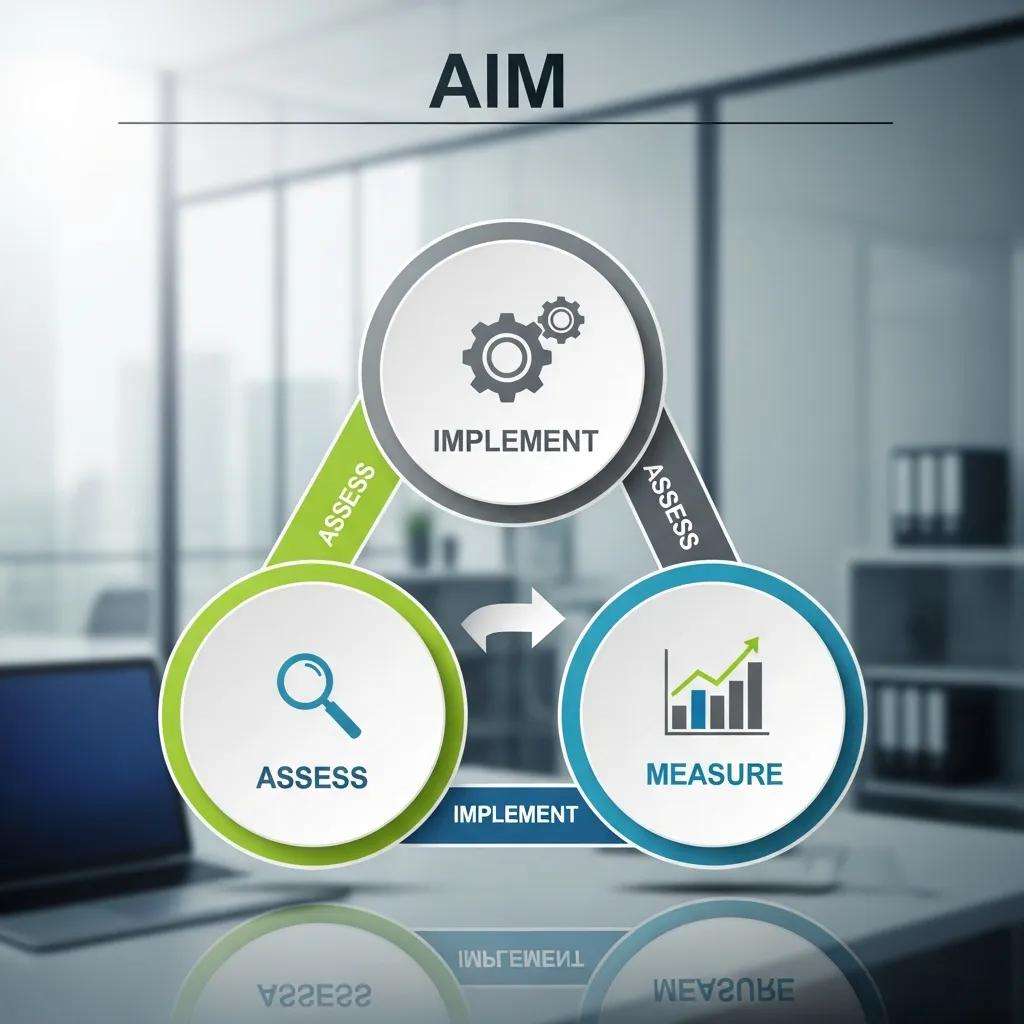
Organizations install change but fail to implement it — behavior doesn't shift, or adoption fades within weeks. The culprit isn't strategy or technology. It's the absence of business discipline for the human side of complex change. The Accelerating Implementation Methodology (AIM), applied by Peacock Hill Consulting and created by Don Harrison, fills that gap. AIM is project management for the people-side of implementation — a structured process with deliverables, tools, and assessments that create discipline where there has often been none.
We Install Change — but We Don't Implement It
Organizations are moving faster than ever. More initiatives, fewer resources, higher pressure. At the surface, there is plenty of activity. But the success rate of strategic change remains disappointing.
Sub-optimized results and outright failure rates are cited at 70% or higher. That number hasn't moved much in decades.
Here's the core reason. Most organizations are competent at getting changes installed. The system goes live. The process is announced. The go-live date is hit. But implementing change — meaning people actually change how they work, and keep doing it — is a different challenge entirely.
The culprit isn't strategy or technology. It's the absence of business discipline for the human elements of complex change. Organizations manage budgets, timelines, and technology with rigor. They leave behavior change to chance.
That gap — between installing and truly implementing change — is exactly what IMA's AIM (Accelerating Implementation Methodology) was built to close. For a deeper look at this distinction, Installation vs. Implementation: The Trap That Kills ROI.
Project Management for the People Side
Every change initiative has a technical plan — a timeline, a budget, a go-live date. Most stop there. AIM adds a parallel plan for the human side, with the same rigor applied to people that organizations already apply to systems.
AIM is a structured process. It overlays directly on top of the technical plan and existing project management approach. It comes with deliverables, tools, and measurement assessments — creating discipline where there has often been none.
AIM deliverables are planned, managed, and measured. Just as organizations manage financial and operational components, AIM brings that same operational discipline to behavior change.
The greatest risk in any implementation is not technology failure. It is the failure to change behavior. AIM addresses that risk with the same operational discipline applied to budgets and timelines.
Peacock Hill Consulting applies AIM in client work, training, and certification. Implementation Management Associates (IMA) is the research organization where AIM originated.
Four Decades of Real-World Application
Over four decades, AIM has been applied across a wide range of complex, transformational initiatives. The contexts differ. The core challenge — getting people to actually change how they work — stays the same.
ERP & Technology Implementations
Getting new technology installed is necessary — but it is not enough for ROI. Most ERP failures are not technology failures. They happen because user adoption is under-managed. AIM builds the human adoption plan alongside the technical rollout, identifying who is impacted, how their work changes, and what support they need — before go-live, not after.
Quality & Process Improvement (Lean / Six Sigma)
Lean and Six Sigma have a strong business case. But they are susceptible to the same implementation barriers as any major change — weak executive commitment, poor reinforcement, and resistance. In IMA field research of 240+ Six Sigma practitioners, 90% rated structured engagement tools a top priority for improving results.
Mergers & Acquisitions
M&A creates uncertainty fast. Employees worry about jobs, reporting lines, and culture. Without a structured plan, that anxiety drains value quickly. AIM uses data-driven tools to measure three key factors early: resistance, change agent capability, and leadership alignment. When these are visible, they can be managed before they become problems.
Cultural Change
Cultural change is the hardest type of transformation. The biggest risk: organizations try to change culture using the same disconnected approach they're trying to escape — treating each initiative in isolation. AIM addresses this by treating all change as part of one portfolio. The approach can be tailored to each initiative while keeping the overall strategy aligned.
The common thread across all four contexts: success depends on how well you manage the human side. That is why AIM is built as a system — not a one-off toolkit.
Not a Toolkit. A System.
Many organizations treat change management as a set of tools you pull out when trouble starts. AIM is different. It is designed to become part of how the organization operates — not a response to problems, but a standard part of how business is done.
- Systemic AIM becomes part of the culture — "how business is done." Change skills are not lost between initiatives. Each implementation builds organizational capability for the next.
- Systematic Integrated principles, tactics, tools, and assessments give every team a shared language and a repeatable process. No more starting from scratch each time.
- Practical Operationally focused on what to do — based on field research, not abstract theory. Every step has a clear deliverable. Teams always know what comes next.
- Business-Driven Grounded in research but translated into business language. Leaders and implementation teams can use it without change management expertise.
This system-level design lets organizations manage not just one change — but five, ten, or twenty concurrent initiatives without losing control or overwhelming the organization.
10 Principles That Act Like a Risk Dashboard
The AIM Roadmap depicts 10 principles in a cyclical form. Real-world change is iterative — steps repeat or occur in different sequences as conditions shift. Together, they form a risk dashboard you monitor from start to finish. Each principle has deliverables, tools, and tactics tied to it.
Define the Change
Create a clear, compelling change definition that builds alignment. The Business Case for Action answers three questions: What is changing? Why is it changing? What are the consequences if we don't succeed? If leaders cannot describe the change the same way, alignment is missing.
Build Change Agent Capacity
Implementation happens locally — in departments, teams, and workstations. Identified change agents need three things: accountability, the right competencies, and enough coverage across all impacted areas. Without them, the implementation plan stays on paper.
Assess the Climate
Change capacity is shaped by implementation history and current organizational stress — meaning how many initiatives are already competing for the same people and resources. The greater the stress, the higher the likelihood of failure. The greater the need for structure.
Generate Sponsorship
Leaders control the pace of change. Acceleration happens when what leaders say, do, and reinforce are aligned — and when sponsorship is durable from beginning to end, not just at launch. Sponsorship that fades after the kickoff is one of the most common failure causes. See also: 4 Real-Life Sponsor Issues and How to Handle Them.
Determine Change Approach
Some elements are compliance-driven — there is no choice. Others require commitment — winning hearts and minds. Leaders need to know which approach fits which element. Using the wrong approach wastes time. It also generates resistance that could have been avoided.
Develop Target Readiness
Organizations often wait too long to build readiness. Resistance is not driven by whether people see the change as positive or negative. It is driven by work disruption — how much of daily work will be different. Build readiness before go-live, not after adoption stalls.
Build a Communication Plan
A communication plan is not an implementation plan. AIM emphasizes the right message, the right audience, the right vehicles — and always a feedback loop. Without the feedback loop, communication is just broadcasting. Broadcasting does not change behavior.
Develop a Reinforcement Strategy
There is no lasting behavior change unless reinforcements change. Leaders need to apply rewards and consequences tied to observable behavior — and make old ways harder while making new ways easier. For a practical guide, see 4 Key Principles for a Strong Change Reinforcement Plan.
Create Cultural Fit
If a change conflicts with culture, culture wins — every time. Cultural change is multi-year and resource-heavy. Without durable sponsorship, it is very likely to fail. Organizations that underestimate this step usually find out too late.
Prioritize Action
Build an Implementation Plan integrated with the technical plan. At minimum, include a Business Case for Action and strategies for Sponsorship, Readiness, Reinforcement, and Communication. All 10 principles together form a real-time risk dashboard — surfacing what is working and where action is needed before adoption breaks down.
All 10 principles together = a real-time risk dashboard. Each step surfaces what's working, what's at risk, and where action is needed — before adoption breaks down. Explore the tools that support each step at the AIM Toolkit and Assessments.
AIM Is Designed to Be Taught
AIM is not just applied by outside consultants. It is designed to be taught. The goal is to build internal capability so your organization can run AIM on its own — without starting over on every initiative.
Action Learning programs range from 2-hour executive briefings to full AIM accreditation. Every format focuses on practical application, not theory.
When AIM lives inside the organization, the benefits add up over time. Teams get faster. Each change builds on the last. You rely less on outside help. Your capacity for change grows.
Bottom line: If your organization manages multiple complex initiatives with limited resources, IMA's AIM gives you a proven structure for the people side of change — so adoption sticks and outcomes improve. Explore the AIM Toolkit and Assessments to see the tools that support each step.
Ready to Lead People Through Business Change?
If you're managing complex initiatives and need structure for the human side of implementation, let's talk. Peacock Hill Consulting applies IMA's AIM to help organizations move from installation to true implementation.
AIM (Accelerating Implementation Methodology) is applied by Peacock Hill Consulting. The methodology was created by Don Harrison and is grounded in 40+ years of implementation research from Implementation Management Associates (IMA). Implementation Management Associates (IMA) is the research organization where AIM originated. Peacock Hill Consulting is the firm that applies AIM in client work, training, and certification.