

The parallels between parenting and AI implementation are uncomfortably real, and both come down to the same AIM principle.
I have a 9-month-old at home. And I have been thinking a lot lately about AI bots at work.
At first glance, these two things have nothing to do with each other. One involves midnight wake-ups, pureed sweet potato, and an intense negotiation over whether mama’s slippers are a toy. The other involves automation workflows, large language models, and an intense negotiation over whether the AI’s output needs a human review.
But the more time I spend with both, the more I keep running into the same problem. With my son. With AI. With every major change initiative I have ever seen up close.
| You can set up the system perfectly. Getting it to actually work the way you need it to? That is a completely different challenge. |
|---|
Installation is the easy part
When my son was born, my husband and I prepared thoroughly. We read the books. We watched the videos. We installed the car seat three weeks early and had the nurse and firehall check it. We set up the white noise machine, the blackout curtains, and the sleep schedule recommended by every pediatric sleep guide on the internet.
Installation: complete.
Then he arrived. And he had not read any of the books.
This is, almost word for word, what Don Harrison (the creator of AIM, the Accelerating Implementation Methodology we use at IMA Worldwide) has been saying about organizational change for decades. Installation puts something in place. Implementation is when the thing actually works the way it is supposed to, sustained over time, with real people (or in this case, a real baby) behaving the way the system requires.
You can install a sleep schedule. Getting a 9-month-old to actually sleep on it is implementation. And implementation, it turns out, is significantly harder.
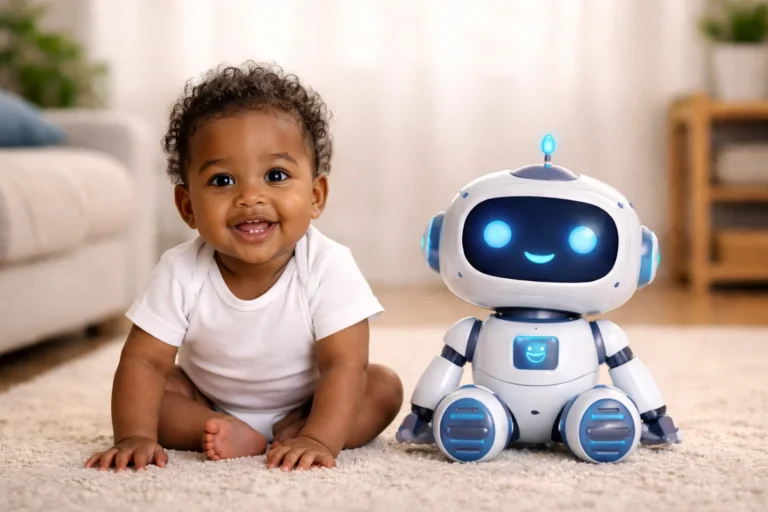
AI bots are remarkably similar to infants
Before anyone takes this the wrong way: I am not calling AI unintelligent. I am saying that both a 9-month-old and an AI bot share a specific and humbling characteristic: they will do exactly what they have been trained to do, in the environment they were trained for, and then something unexpected will happen and you will need to adapt.
| The parallel: A baby learns to pull herself up on the coffee table: great motor development! But terrible when the coffee table has a full coffee cup in reach. An AI bot learns to route customer inquiries efficiently: great automation. Terrible when a customer’s question falls outside the training data and the bot confidently gives the wrong answer. |
|---|
In both cases, the tool is working exactly as designed. The gap is between what was anticipated during setup and what reality actually looks like once the system is running in the wild.
This is the installation-implementation gap, showing up in your nursery and your operations center at the same time.
The five metrics that actually matter
At IMA Worldwide, we define full success by five metrics — not two. Most organizations measure only the first two and declare victory:
- On time (we launched by the deadline)
- On budget (we did not overspend)
The three that determine whether you actually got what you paid for:
- Business objectives met (are we getting the outcomes we promised?)
- Technical objectives met (does the system perform as designed?)
- Human objectives met (are people actually doing things differently?)
The parenting translation of these five metrics is, frankly, devastating in its accuracy.
- On time: Baby arrived on her due date. ✓
- On budget: We did not exceed our hospital budget. ✓
- Business objectives met: He is healthy and thriving. ✓
- Technical objectives met: All the gear works. The monitor monitors. The car seat car seats. ✓
- Human objectives met: Is everyone actually sleeping, eating, and behaving according to the plan? … We are working on it.
The human objectives are always the last to arrive. In parenting, in AI implementation, in every organizational transformation.
Reinforcement is the job nobody wants
Here is the part of parenting, and AI management, that the books do not fully prepare you for: the work does not end at launch.
Getting my son to stop pulling my hair required consistent reinforcement of the same behaviors, time after time, without caving when it was hard. Parents call it consequences, change management practitioners call it the Reinforce phase of AIM’s Express-Model-Reinforce framework. Both are describing the same thing: the sustained, deliberate effort required to make a new behavior stick after the initial installation is done. I’ve told my son “we don’t hurt mommy” and “we need to be gentle with others”, now I’ve got to keep reminding him every time his behavior deviates.
| Most AI implementations fail the same way most sleep training fails. It’s not because the approach was wrong, but because reinforcement stopped too soon. |
|---|
With AI bots specifically, reinforcement looks like this: monitoring outputs regularly, correcting errors when they surface, updating training data as the real-world environment changes, and making sure the humans working alongside the bots are actually using them as intended rather than quietly reverting to the old way.

What both teach you about change
There is a reason experienced change practitioners tend to be unusually patient people. Genuine implementation, whether you are implementing a new AI workflow, a new enterprise system, or a new bedtime routine, takes longer than you think. It requires more reinforcement than feels reasonable, and almost always hits a rough patch around month three when everyone quietly wonders whether the old way was so bad after all.
My son is nine months old. He is not sleeping perfectly. The AI implementations we support at IMA Worldwide are not running perfectly either. But both are moving in the right direction because we are treating them as implementation projects, not installation projects.
We are measuring the right things. We are reinforcing the right behaviors. We are resisting the temptation to declare victory at go-live and move on.
| The AIM principle at work: Installation is necessary but not sufficient. You cannot have implementation without installation — but installation alone never delivers the ROI you promised. The gap between the two is closed through consistent, behavior-based reinforcement. Whether the “behavior” in question belongs to a toddler, a team, or a bot. |
|---|
Implementation Metrics Reinforcement Parallels Hurdles Adoption
If you are leading an AI implementation right now and it feels a little like parenting a 9-month-old — exhausting, unpredictable, occasionally covered in sweet potato — that is not a sign that something has gone wrong. It is a sign that you are doing the real work of implementation, not just installation.
The organizations that realize ROI from AI are not the ones with the most sophisticated models. They are the ones that treat adoption as a change management problem and reinforce new behaviors long enough for them to become the norm.
My son will sleep through the night eventually. I am choosing to believe the same thing about our AI workflows.