

Get the Complete PDF for Offline Reading
This article is part of our AIM Methodology series.
- What the Installation Trap Is — and Why It Harms Change Management ROI
- Defining the Installation Trap: Common Causes and Consequences
- How Premature Project Completion Cuts ROI
- Installation vs. Implementation: Why the Difference Matters
- What Risks Come with Premature Project Completion?
- How the Accelerating Implementation Methodology Helps Avoid the Installation Trap
- How Measuring Adoption Drives Better ROI in Change Initiatives
- What Role Do Executive Sponsors and Change Professionals Play?
- 7 Signs Your Project Is Stuck at Installation
- Frequently Asked Questions
- Conclusion
- About the Author
TL;DR: The installation trap occurs when organizations declare a change initiative complete after the technical rollout — before people have actually changed how they work. The result is wasted investment and outcomes that never materialize. This article explains the trap, why it undermines ROI, and how the Accelerating Implementation Methodology (AIM), developed by Don Harrison through 40+ years of research at Implementation Management Associates (IMA), gives organizations a structured path from deployment to sustained adoption.
Most organizations don’t fail at installation — they fail by stopping there. Understanding the difference between installation vs implementation is where ROI is won or lost: you can deploy the software, run the training sessions, and declare the project complete, while the behavioral and organizational shifts that actually drive results never take hold.
This is the installation trap. It occurs when project completion is measured by technical delivery rather than sustained adoption. The gap between installation and implementation isn’t a matter of semantics — it’s the difference between a system that sits dormant and one that fundamentally changes how people work.
IMA Worldwide’s Accelerating Implementation Methodology (AIM) was built specifically to close that gap. What follows is a practitioner’s breakdown of why premature project completion destroys ROI — and what true implementation actually requires.
What the Installation Trap Is — and Why It Harms Change Management ROI
The installation trap describes projects declared complete once systems are in place, even though people haven’t changed how they work. Research shows roughly 70% of ERP implementations stop at installation without achieving full behavioral adoption, producing significant underperformance. That mismatch — focused on deployment rather than adoption — undermines ROI because the intended behavioral shifts never take hold. Sustained adoption is essential: without it, investments won’t deliver the expected outcomes.
Early gains after installation often fade without continued effort, creating long-term adoption shortfalls. For example, a study tracking adoption over five years found that only 40% of organizations maintained full implementation beyond the first year.
In real-world enterprise settings, failure modes such as “launch and leave” are common — technical teams hand off projects too soon, assuming adoption will follow on its own. That pattern frequently produces stalled change initiatives and reduced ROI.
Peacock Hill Consulting has observed that organizations failing to distinguish installation from implementation typically see a 25–35% shortfall in expected benefits within the first 18 months post-rollout.
Defining the Installation Trap: Common Causes and Consequences
The installation trap usually arises from organizational gaps — unclear communication, insufficient training, or weak leadership engagement. Those gaps create a disconnect between the project’s intent and the daily behaviors needed to realize it. Left unchecked, the result is wasted effort, lower productivity, and a shortfall in the ROI the project promised. Addressing the human side — engagement, reinforcement, and ongoing support — is the best defense.
How Premature Project Completion Cuts ROI
When projects close before users adopt new practices, the expected performance gains never materialize. Teams may have the tools but not the habits, creating gaps between planned and actual outcomes. That misalignment undermines business goals and reduces the financial returns the change was meant to deliver.
Industry data suggests premature project closure can reduce ROI by an average of 20–30%, with some sectors losing even more when change requirements are complex. Organizations that extend implementation to include behavioral adoption typically see ROI improvements of 15–25% compared with those that stop at installation.
Peacock Hill Consulting’s field research show projects with sustained leadership engagement and continuous reinforcement outperform others.
Installation vs. Implementation: Why the Difference Matters
Understanding this distinction is vital. Installation covers the technical rollout — software, equipment, configuration. Implementation is broader: it ensures people change how they work so the new tools deliver value. Treating the technical step as the finish line creates the trap.
In practice, many organizations confuse the phases, resulting in a “completion illusion” where technical success hides behavioral failure. That confusion is a primary cause of stalled projects and lost ROI.
For example, a financial services firm reported 95% of their CRM deployed on schedule, but only 60% of sales staff fully adopted the new processes six months later, producing a 25% shortfall in expected revenue gains.
Key Differences Between Installation and Implementation Processes
Installation measures success by technical completion; implementation measures success by behavioral adoption and sustained use. Installation relies on technical resources and project tasks. Implementation requires training, coaching, communication, and ongoing measurement. Teams that separate these priorities can better allocate effort and set realistic success criteria.
Common failure modes practitioners observe include a “checklist mentality” during installation and a “handoff syndrome” where technical teams disengage after rollout. Spotting these patterns helps organizations design more effective change strategies.
How Recognizing This Distinction Reduces Project Risk
Clear definitions and expectations reduce the risk that adoption will be assumed rather than planned. By preparing for both technical deployment and behavioral change, organizations can engage stakeholders, budget for continued support, and create feedback loops that catch issues early — lowering the chance of premature closure.
Peacock Hill Consulting recommends embedding change-management milestones alongside technical milestones to ensure balanced progress. This approach has been shown to reduce project risk by up to 40% in complex enterprise initiatives.
What Risks Come with Premature Project Completion?

Shutting projects down too early introduces risks that weaken adoption: lack of leadership follow-through, confusion between installation and implementation, and poor communication — all of which leave users unprepared to change what they do day to day.
In enterprise settings, these risks often show up as resistance to change, higher error rates, and frustrated employees — each of which further erodes ROI and delays benefits realization.
Common Project Completion Risks That Undermine Adoption
- Insufficient Leadership Involvement: When leaders don’t visibly back the change, teams lack direction and the resources to succeed.
- Installation Mistaken for Implementation: Treating rollout as the end point leaves human factors — training, reinforcement, accountability — unaddressed.
- Communication Gaps: Inconsistent or unclear messaging breeds confusion and resistance, slowing or blocking adoption.
How Risk Mitigation Strengthens Long-Term Change
Mitigating these risks means spotting them early, keeping stakeholders engaged, and investing in the supports users need to form new habits. That includes targeted training, clear communications, and mechanisms for feedback and course correction — practices that build a culture of continuous improvement and protect ROI.
IMA Worldwide’s AIM methodology offers a structured way to mitigate risk by integrating leadership alignment, stakeholder engagement, and continuous measurement — approaches Peacock Hill Consulting has successfully applied across sectors.
How the Accelerating Implementation Methodology Helps Avoid the Installation Trap
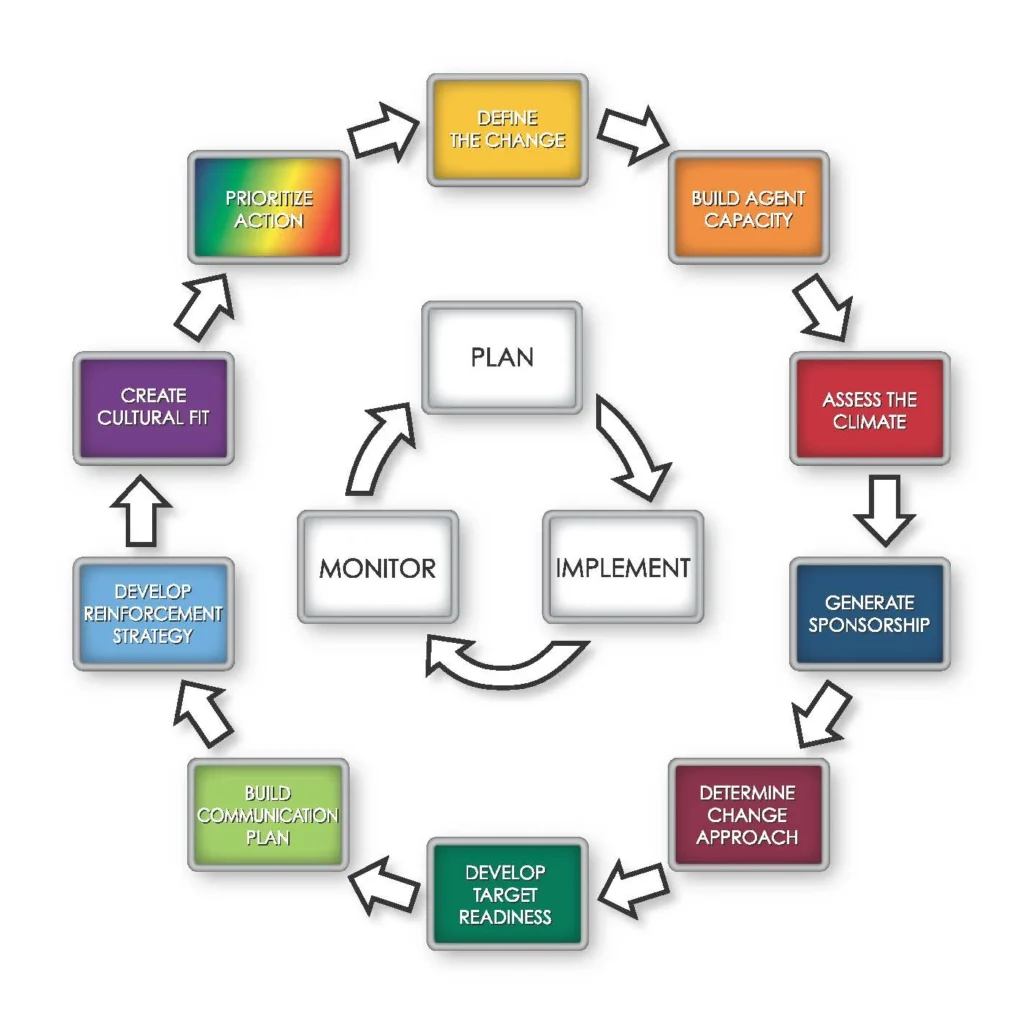
The Accelerating Implementation Methodology (AIM) is a practical framework that shifts the focus from completion to adoption. AIM emphasizes the behaviors, governance, and measurement needed to turn installations into lasting change.
Enterprises using AIM report a 35% higher rate of sustained adoption compared with organizations that rely solely on technical rollout, according to IMA Worldwide benchmarking data.
How AIM Guides Change Management in Practice
AIM structures activities around stakeholder engagement, clear and consistent communication, and continuous feedback. It helps teams design interventions that reinforce new behaviors and measure progress so adjustments can be made before issues become entrenched.
For example, a healthcare provider using AIM reduced resistance to change by 40% and improved compliance with new protocols within six months of rollout.
Practical Steps AIM Uses to Prevent Premature Closure
- Aligning Leadership: Active leader participation creates the sponsorship and accountability that sustain change.
- Identifying Resistance: Early detection of resistance lets teams address concerns before they derail adoption.
- Reinforcing Behaviors: Ongoing coaching, reminders, and measurement help turn new practices into habits.
How Measuring Adoption Drives Better ROI in Change Initiatives
Tracking adoption gives a clear view of whether new ways of working are taking hold — and whether the project is delivering value. Metrics turn anecdotes into evidence and make it possible to course-correct when adoption stalls.
Peacock Hill Consulting emphasizes that organizations measuring adoption regularly see a 20% improvement in ROI realization compared with those that do not.
Metrics That Reveal Adoption and Sustainability
Focus on meaningful, actionable measures such as:
- User Engagement Levels: How often people use new tools or follow new processes.
- Frequency of New Behaviors: How regularly employees perform the target behaviors after rollout.
- Achievement of Business Objectives: Whether the change is producing the outcomes the organization set out to achieve.
Using Data to Prove ROI and Guide Improvements
Data lets leaders link behavior to outcomes, prioritize interventions, and allocate resources where they’ll have the most impact. Regular AIM assessments and performance tracking enable iterative improvements that protect and grow ROI over time.
What Role Do Executive Sponsors and Change Professionals Play?
Executive sponsors and change professionals are essential to turning installations into sustained results. Their visible commitment, oversight, and hands-on guidance are often the difference between a finished project and a changed organization.
Peacock Hill Consulting’s experience shows projects with engaged executive sponsors are 50% more likely to achieve full implementation and realize projected ROI.
Executive Sponsor Responsibilities for Sustaining Change
Sponsors link the initiative to strategy, secure resources, and keep accountability alive. They monitor progress, remove barriers, and reinforce the behaviors that support long-term adoption.
Best Practices for Change Professionals to Ensure Implementation
- Transparent Communication: Open, consistent messaging builds trust and clarifies expectations.
- Employee Involvement: Engaging users early and often creates ownership and improves design.
- Measuring Success: Regular assessment highlights what’s working and where to focus improvement efforts.
To explore proven approaches and additional resources, visit IMA Worldwide, a leader in practical change solutions, and read Peacock Hill Consulting’s insights on change management ROI and resistance to change.
7 Signs Your Project Is Stuck at Installation
- Technical rollout completed but user engagement remains low.
- Training is minimal or one-off without follow-up.
- Leadership involvement fades immediately after go-live.
- Behavioral metrics show no improvement post-installation.
- Feedback loops and continuous support mechanisms are absent.
- Communication about benefits and expectations is inconsistent.
- Project milestones focus only on technical deliverables, ignoring adoption.
Frequently Asked Questions
What is the installation trap?
The installation trap is when a project is deemed complete right after the technical rollout, without ensuring users have adopted the new behaviors needed to realize the intended benefits. The result is reduced ROI and stalled change.
Why do projects often stop at installation?
Projects stop at installation because of organizational gaps: unclear communication, weak leadership engagement, and a focus on technical completion rather than behavioral adoption. That creates a false sense of closure and overlooks the human factors essential for success.
How does AIM prevent premature project closure?
The Accelerating Implementation Methodology (AIM) prevents premature closure by emphasizing leadership alignment, stakeholder engagement, continuous communication, and measurement of behavioral adoption. This structured approach keeps projects moving from installation to full implementation.
What is the ROI impact of the installation trap?
The installation trap can reduce project ROI by 20–30% on average, as organizations fail to realize the full benefits of their investments due to incomplete behavioral adoption and premature closure.
How do you know when implementation is truly complete?
Implementation is truly complete when new behaviors are consistently adopted and sustained across the organization, key performance metrics meet or exceed targets, and continuous support mechanisms are in place to reinforce and improve the change over time.
Conclusion
Recognizing the difference between installation vs implementation is vital to protecting your project ROI. The installation trap is avoidable when organizations treat adoption as part of the project, not an afterthought. By prioritizing sustained behavior change — through leadership alignment, clear communication, measurement, and frameworks like the AIM methodology — you safeguard your investment and unlock the outcomes you expected. Peacock Hill Consulting encourages teams to adopt these proven practices and resources to turn installations into lasting organizational change.
About the Author
This article was developed by Peacock Hill Consulting, a specialist in change management strategy and execution. Ann Marvin, President & CEO at Peacock Hill, brings more than 15 years of experience helping enterprises maximize project ROI through practical adoption and implementation work. Peacock Hill partners closely with IMA Worldwide to integrate the AIM methodology into hands-on, results-driven change initiatives.