
Your Process Is Better. Why Isn't Anyone Using It?
Operational excellence programs are very good at designing improved processes. They are far less effective at making those processes stick. Until people actually change how they work and keep working that way, your improvements stay theoretical. IMA Worldwide's AIM closes the gap between process design and sustained behavioral change.

Operational excellence is the disciplined pursuit of continuous, measurable improvement in how work gets done, combining process design methodologies (Lean, Six Sigma, TPS, continuous improvement) with the leadership behaviors, readiness checks, and reinforcement systems that make new ways of working stick. IMA Worldwide's Accelerating Implementation Methodology (AIM) supplies the adoption layer most OpEx programs are missing, so your redesigned process does not drift back to baseline at month eighteen.
Great Design Isn't Enough. People Still Have to Use It.
You mapped the value stream. You eliminated waste. The new process is documented, validated, and objectively better.
So why does adoption stall, or worse, why do teams quietly drift back to old habits six months later? Because process improvement is not the same as implementation. Most operational excellence programs focus on designing the better way. Far fewer address what it takes to make people actually work that way, consistently and permanently.
Top causes of failure: lack of commitment by top management, resistance to change, and inadequate rewards and recognition systems. (IEEE Global Survey of 201 Lean Six Sigma experts)
What happens to most Operational Excellence improvements over time
High energy
Visible leadership, strong compliance, and broad enthusiasm carry the rollout through the first wave.
Attention shifts
Workarounds emerge, old habits return, and the new standard starts competing with the path of least resistance.
Reinforcement stops
Leadership moves on to the next priority. Drift accelerates because the system no longer rewards the new behavior.
Back to baseline
The organization is ready to "improve" again, repeating the cycle without addressing why improvements do not stick.
Why Operational Excellence Improvements Don't Stick
Drift is predictable. It shows up in the same four patterns across industries, and each traces to a specific gap in the adoption system.
Leadership Attention Shifts
Leaders visibly support the launch, then move to the next priority. Without ongoing leadership involvement, people conclude the change was not that important after all.
Middle Managers Weren't Prepared
Frontline supervisors experience the most disruption while simultaneously leading their teams through change. Without preparation and involvement, they become bottlenecks instead of champions.
Reinforcement Never Changes
Performance reviews, recognition, and consequences still reward the old way of working. People rationally stick with what gets reinforced, regardless of what the new process says.
The "Why" Never Reached the Front Line
Communication explained organizational benefits but never answered "what does this mean for me?" from the perspective of the people doing the work.
Harness IMA Worldwide's AIM to Make Operational Excellence Stick
Lean, Six Sigma, and continuous improvement methodologies are excellent at identifying and designing better processes. IMA Worldwide's AIM adds the missing layer: the leadership behaviors, reinforcement systems, and adoption architecture that turn process improvements into permanent behavioral change.
Your Operational Excellence Methodology
Process Design
Lean, Six Sigma, TPS, and continuous improvement methodologies define what the better way looks like.
AIM
Leadership involvement, target readiness, and reinforcement strategy build the conditions for adoption.
Sustained Results
Improvements that stick because behaviors actually changed and the system rewards the new way of working.
The Missing Pieces in Most Operational Excellence Programs
AIM brings six capabilities that process methodologies typically leave out. Each closes a specific adoption gap.
Leadership Involvement
AIM defines the 6 specific tasks leaders must perform and cannot delegate to create conditions where people actually adopt new ways of working. Behavioral specificity replaces vague "executive sponsorship."
Target Readiness Assessment
Before launching, AIM measures five elements of readiness: Information, Willingness, Ability, Confidence, and Control. This reveals exactly where people are stuck so you can address gaps before they become resistance.
Reinforcement Strategy
Using the Express-Model-Reinforce framework, AIM identifies what is actually getting reinforced in your organization and redesigns recognition, consequences, and measurement to support adoption.
Frame of Reference Translation
AIM translates organizational benefits into specific "what does it mean for me" answers for each group affected. People adopt when they understand the change from their perspective, not yours.
Resistance Diagnosis
Instead of treating all resistance the same, AIM diagnoses the source. Lack of information, ability, or willingness each requires a different intervention.
Adoption Metrics
AIM pairs your process metrics, OEE, defect rates, and cycle time, with adoption KPIs: observable behaviors that indicate whether people are actually working differently.
Where Is Your OpEx Initiative Stalling?
Most operational excellence programs have strong process design but weak adoption infrastructure. A short assessment using the Accelerating Implementation Methodology can identify where reinforcement gaps are causing drift before the next "improvement cycle" starts all over again.
Common Operational Excellence Implementations We Support
AIM adds the adoption layer across the full range of operational excellence programs.
- Lean Manufacturing Rollouts: 5S, value stream mapping, pull systems adoption
- Six Sigma Deployments: DMAIC project sustainability, Black Belt effectiveness
- Continuous Improvement Programs: Kaizen sustainability, suggestion system adoption
- Standard Work Implementation: Getting operators to follow documented standards
- Safety Culture Transformation: Behavior-based safety, near-miss reporting
- Quality Management System Updates: ISO implementation, procedure adherence
- Operational Technology Integration: MES, IoT, automation on the shop floor
- Performance Management Systems: Tiered meetings, visual management, daily accountability
What Practitioners Say About AIM
"Having led change management for several Fortune companies, I have reviewed and used multiple change management models. The best one that I have used, and that has moved the change needle the farthest, is AIM. No model gets to the heart of change and produces the actual business results quicker. Well worth the investment."
Director, Leadership and O.D. (former), Specialty Retail"I am very impressed with your model and the emphasis on Installation versus Implementation. I have been involved with several change efforts where reinforcement was not built into the design and we were left with installation and lack of ROI."
Financial Services Executive"AIM has been a tremendous aid in making cultural barriers more visible and opening the dialogue about behaviors that need to change to meet our target and expected outcomes."
Black Belt, Healthcare System"The AIM methodology is one of the best investments we have ever made."
VP, Leadership and OD, Technology CompanyOperational Excellence and AIM: Answers to Key Questions
Why don't Lean and Six Sigma improvements stick?
Process design excels at creating better workflows but often fails at sustained behavioral adoption. An IEEE global survey of 201 Lean Six Sigma experts identified lack of top management commitment, resistance to change, and inadequate rewards and recognition systems as the top three causes of Lean Six Sigma failure. IMA Worldwide's AIM addresses all three directly through leadership involvement, target readiness, and reinforcement strategy.
How is AIM different from change management inside Operational Excellence programs?
Most operational excellence change management focuses on communication and training. IMA Worldwide's AIM focuses on the 6 non-delegable leadership tasks, a 5-element target readiness assessment, and a reinforcement strategy built on the Express-Model-Reinforce framework. Communication explains the change; AIM builds the conditions under which people actually adopt it.
When should AIM be added to an Operational Excellence initiative?
Ideally at the start, when leadership involvement, readiness, and reinforcement can be designed in from day one. AIM also rescues stalled initiatives: when adoption has plateaued or drift is setting in, an Implementation Risk Forecast diagnoses where the gaps are so targeted intervention can restart momentum without redesigning the process.
Can AIM work with our existing Lean or Six Sigma program?
Yes. AIM does not replace Lean, Six Sigma, TPS, or continuous improvement methodologies. It adds the adoption layer on top of them. Process tools identify and design the better way; AIM ensures people actually work that way, consistently and permanently, by defining leadership behaviors, measuring readiness, and aligning reinforcement systems.
Why do improvements fade after leadership attention shifts?
The Express-Model-Reinforce framework explains the drift: what leaders say (Express) has 1x impact, what leaders do (Model) has 2x impact, and what the organization reinforces has 3x impact. When leadership attention moves on, modeling stops and reinforcement often reverts to rewarding the old way. Without deliberate reinforcement design, the 3x lever pulls people back to baseline regardless of what the new process says.
How do you measure whether an operational excellence improvement is actually being adopted?
AIM pairs process metrics such as OEE, defect rates, and cycle time with adoption KPIs: observable behaviors that indicate whether people are working differently. Adoption metrics might include documented standard-work compliance, tiered-meeting participation, near-miss reporting frequency, or Kaizen suggestion rates. Pairing process and adoption metrics reveals whether gains come from genuine behavior change or from short-term compliance that will fade.
What is the Implementation Risk Forecast?
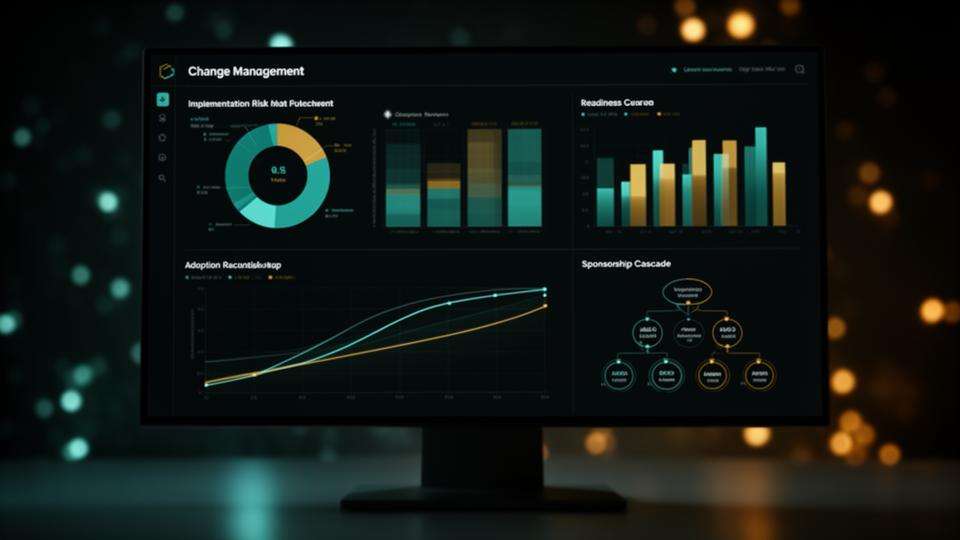
The Implementation Risk Forecast is an IMA Worldwide diagnostic that measures sponsorship strength, target readiness, and reinforcement alignment across an operational excellence initiative. It identifies the specific adoption gaps driving drift so leaders can close them with targeted interventions rather than broad-based retraining.
Does AIM address resistance to operational excellence changes?
Yes. AIM treats resistance as a symptom, not the problem. Resistance diagnosis identifies the root cause: missing information, insufficient ability, low willingness, low confidence, or inadequate control. Each cause requires a different intervention. Treating all resistance as a communication problem is one of the most common reasons operational excellence programs stall.
Related Resources

What Is AIM?
The full Accelerating Implementation Methodology, built on 40+ years of field research.

The EMR Framework
Why reinforcement carries 3x the impact of communication and how to build it into your operating rhythm.
AIM Tools and Assessments
Validated diagnostics to measure sponsorship, readiness, and reinforcement before drift sets in.
Stop Redesigning the Same Process Every 18 Months.
You have already designed the better way. Now make sure people actually work that way, permanently. Start with an Implementation Risk Forecast to find where adoption is stalling, then close the gaps with targeted sponsorship, readiness, and reinforcement support.